COMPOUND NPK · 15-15-15
NPK 15-15-15
A balanced 45% grade for basal application where soil fertility is moderate and the target yield does not justify a 54% product. The 1:1:1 ratio is the safe choice when a soil test is not available.
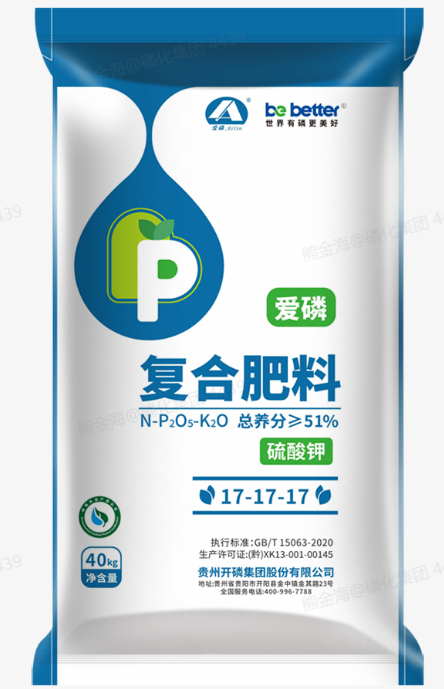
SPECIFICATION
Key figures
| N-P₂O₅-K₂O | 15-15-15 (45% total) |
|---|---|
| Process | Spray granulation |
| Water-soluble P | ≥80% of available P₂O₅ |
| Chloride | Sulphate: low; chloride: medium |
| Secondary nutrients | Sulphur and magnesium, typically 1–2% |
| Granule | 2–4 mm |
| Packing | 25 / 50 kg |
Ranges are typical; the contract and the lot report govern.
WHY IT MATTERS
45% or 54%: the arithmetic that decides
1. Nutrients moved per tonne
18-18-18 carries 54% total nutrients; 15-15-15 carries 45%. Per tonne you move 20% more nutrient with the higher grade, but you pay USD 40–80 more. Divide delivered cost per hectare by kilograms of nutrient applied and the two often land within 5% — the remaining difference is agronomic, not financial.
2. Where 45% wins
Moderate target yields, reasonable soil fertility, and access to labour for two or three top-dressings. On smallholder plots the 45% grade is usually the better economic choice.
3. Where 54% wins
High yield targets, depleted soils, long transport to the farm, or a single basal application as the only practical option.
4. Physical quality decides the rest
Two products with the same analysis can differ in granule hardness and water-soluble P. Soft granules produce fines in the bag, and the fines are often the most soluble fraction — the effective analysis at the field edge ends up below the label.
DEFICIENCY
What a balanced grade cannot fix
A deficiency is not a small yield loss; it accumulates from establishment.
- Severe P deficiency: apply a high-P starter such as DAP before returning to a balanced grade.
- Fruit sizing: potassium demand spikes; a balanced grade cannot support it — switch to high-K or MKP.
- Saline soils: chloride grades add salt load; use sulphate with organic matter.
- Continuous cropping: micronutrient depletion is not solved by N-P-K alone.
Easily confused with
- Old leaves firstmobile nutrients: N, P, K, Mg
- New leaves firstimmobile: S, Fe, Zn, Cu
- Margin scorchK deficiency or salinity
- Uniform yellowing, normal shapecheck sulphur
FIELD DATA
Field comparison against an imported brand
Trial block received our product; control block received an imported brand at the same grade. Same field, same management.
| Site | Crop | Trial (Suitinn) | Control (imported) | Difference |
|---|---|---|---|---|
| Guizhou, Zunyi | Leafy vegetables | 4,525 kg/mu | 3,578 kg/mu | +13.75% |
| Guizhou, Zunyi | Chilli | Continuous fruit set, straight fruit | Longer intervals, uneven shape | +18.75% |
Trials carried out in China by our partner plant; results vary with soil, climate and management.
APPLICATION
Rates and timing
| Crop | Stage | Rate | Method |
|---|---|---|---|
| Vegetables | Basal | 450–750 kg/ha | Broadcast or band at ridging |
| Chilli / solanaceous | Basal + early fruit | 500–750 kg/ha | Furrow or hill, cover after application |
| Rice / corn | Basal | 250–350 kg/ha | Broadcast or band |
On sandy soils split the application to reduce leaching; on heavy soils a single basal is acceptable.
FAQ
Common questions
Can 15-15-15 be used on fruit trees?
As a basal, yes; during fruit sizing switch to a high-K grade. Trees remove large amounts of potassium and calcium, and a balanced grade alone will depress fruit quality over seasons.
How does it differ from a cheap local blend?
Mainly water-soluble P, granule hardness and lot-to-lot consistency — none of which are visible on the bag. Compare lot reports and run a small field block.
Can it be combined with organic fertilizer?
Recommended. Organic matter improves soil structure while the compound supplies immediately available nutrients.
Need this grade for your market?
Send the crop, the grade and the destination port. We reply within one working day.
Request a quote